
The Hook
Renewable power is variable: solar output changes with daylight and weather, while wind generation can rise or fall quickly. Energy storage helps shift electricity to higher-value periods, support grid reliability, and improve the usefulness of renewable projects. Choosing the best renewable energy storage systems is difficult because the companies in this category do not all sell the same type of solution. Some provide batteries, some develop and operate large energy projects, and others focus on thermal storage, research, engineering, or software. This guide has put the eight options through a structured, official-source comparison rather than treating every company as a like-for-like product. The ranking considers identifiable market role, technology scope, application fit, and the amount of information available for independent evaluation.
Full List of Top 8 Brands
- WHES
- NextEra Energy Resources
- Nostromo
- BYD Energy Storage
- Anker SOLIX
- Southwest Research Institute
- RES
- Fluence
Comparison Table
| Brand | Key Products | Key Features | Best For |
|---|---|---|---|
| WHES | Energy-storage solutions described through its official website | Dedicated storage focus; buyers should verify current specifications, chemistry, capacity, and certifications directly | Organizations seeking a storage-focused supplier and a direct product assessment |
| NextEra Energy Resources | Utility-scale renewable energy and energy-storage project development | Large-project development, ownership, and operation capabilities | Grid-scale renewable generation and storage projects |
| Nostromo | IceBrick thermal energy storage | Uses electricity to produce and store ice for later cooling demand | Commercial buildings and cooling-load management |
| BYD Energy Storage | Battery-Box and utility-scale energy-storage solutions | Battery manufacturing heritage, modular systems, and stationary-storage applications | Residential, commercial, industrial, and grid-storage projects |
| Anker SOLIX | Home batteries, solar generators, microinverter systems, and related home-energy products | Residential energy management, solar integration, and backup-oriented products | Homeowners seeking integrated solar and backup storage |
| Southwest Research Institute | Energy-storage research, testing, engineering, and technology-development services | Independent technical expertise, laboratory work, and applied research | Organizations validating, developing, or improving storage technologies |
| RES | Renewable-energy and storage development, engineering, construction, and operations services | Project lifecycle support and renewable-infrastructure expertise | Developers and asset owners delivering large energy projects |
| Fluence | Grid-scale battery-storage systems, software, and service solutions | Integrated hardware, digital controls, optimization, and lifecycle services | Utilities, developers, and grid operators requiring large-scale storage |
Detailed Reviews
1. WHES
Overview: WHES ranks first in this comparison and is presented through its official website as a storage-focused company. Because a structured product dossier was not supplied and product specifications can change, buyers should use the company’s current documentation to confirm system capacity, battery chemistry, operating temperature, warranty terms, inverter compatibility, safety certifications, installation requirements, and service coverage. The most responsible way to assess WHES renewable energy storage systems is to request a current technical datasheet and a complete commercial quotation.

Storage selection depends on more than nominal kilowatt-hours. Round-trip efficiency, usable capacity, depth of discharge, power rating, degradation assumptions, thermal management, monitoring, and fire-safety design all affect lifetime value. WHES should therefore be compared using the same specification framework applied to every supplier. A buyer should also establish whether the quotation covers the battery only or includes the inverter, energy-management system, enclosure, commissioning, maintenance, and grid-interconnection support.
Pros / Key Features:
- Directly positioned for evaluation as an energy-storage supplier.
- Potentially suitable for buyers seeking a dedicated storage conversation rather than a general renewable-energy contractor.
- Its official website provides the starting point for confirming available systems and support.
- Technical validation is essential because public product information should be checked before procurement.
Use Cases / Best For: WHES is best considered by residential, commercial, or project buyers who want to evaluate a storage-focused provider and can obtain current documentation for their specific application. It may be relevant for solar self-consumption, backup power, peak-demand management, or larger installations, but the appropriate use case depends on the models and certifications currently offered.
2. NextEra Energy Resources
Overview: NextEra Energy Resources is a major clean-energy developer and operator rather than a conventional packaged battery retailer. Its official business covers renewable generation and associated infrastructure, including energy storage at utility and project scale. The company’s value is primarily its ability to develop, own, and operate large energy assets, manage permitting and interconnection, and participate in wholesale power markets.
Pros / Key Features:
- Utility-scale project-development and operating experience.
- Ability to combine renewable generation with storage within broader energy projects.
- Relevant expertise in permitting, interconnection, financing, and long-term asset management.
Use Cases / Best For: It is best suited to utilities, commercial counterparties, and infrastructure investors seeking large renewable-energy or storage projects. It is not generally the first choice for a homeowner looking for a small, off-the-shelf battery.
3. Nostromo
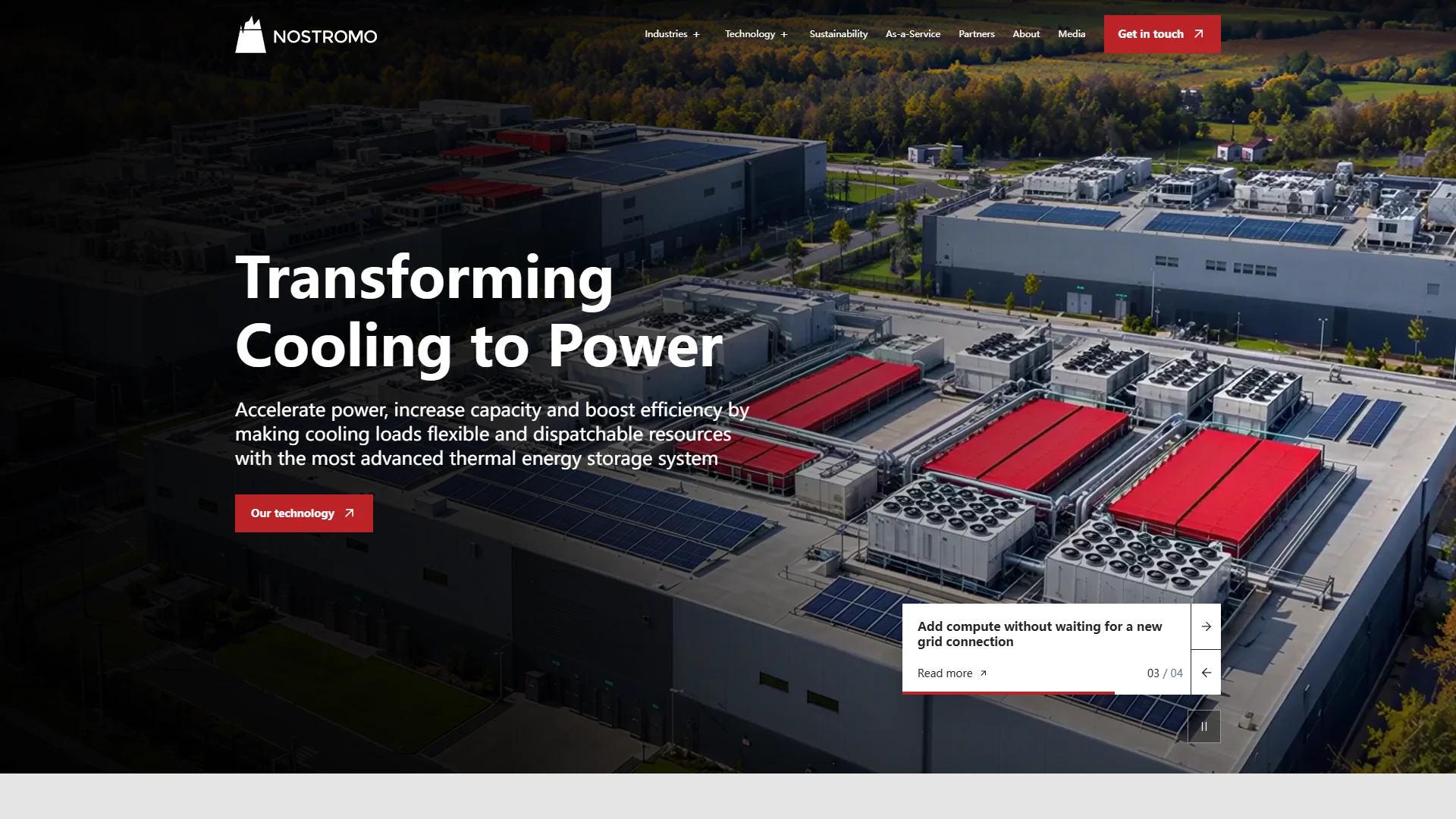
Overview: Nostromo develops thermal energy storage centered on its IceBrick technology. Instead of storing electricity in an electrochemical battery, the system stores energy as ice and uses it to provide cooling later. This approach targets buildings and facilities with significant air-conditioning demand, where shifting cooling production away from peak periods can reduce electricity costs and relieve grid stress.
Pros / Key Features:
- Thermal-storage approach designed around cooling loads.
- Can shift electricity consumption from high-demand periods to lower-demand periods.
- Relevant to commercial facilities with compatible chilled-water or cooling infrastructure.
Use Cases / Best For: Nostromo is best for commercial buildings, campuses, hotels, hospitals, and other facilities where cooling is a substantial energy expense. It is not a universal substitute for a battery because its value depends on cooling demand and the building’s mechanical systems.
4. BYD Energy Storage
Overview: BYD Energy Storage is part of BYD’s broader battery and new-energy business. Its stationary portfolio includes Battery-Box products and larger energy-storage solutions for residential, commercial, industrial, and utility applications. BYD’s competitive position is supported by its experience in battery manufacturing and electric transportation, although each project still requires verification of the exact cell chemistry, system architecture, certifications, and regional availability.

Pros / Key Features:
- Broad stationary-storage range spanning smaller and larger applications.
- Battery-manufacturing expertise and established energy-storage product families.
- Modular designs are available in parts of the portfolio, subject to model and market.
- Suitable for solar integration, backup, load shifting, and grid-support projects.
Use Cases / Best For: BYD Energy Storage is a strong candidate for buyers comparing residential batteries, commercial systems, and utility-scale installations. Product compatibility with the inverter, local grid rules, installer qualifications, and warranty conditions should be checked before selection.
5. Anker SOLIX
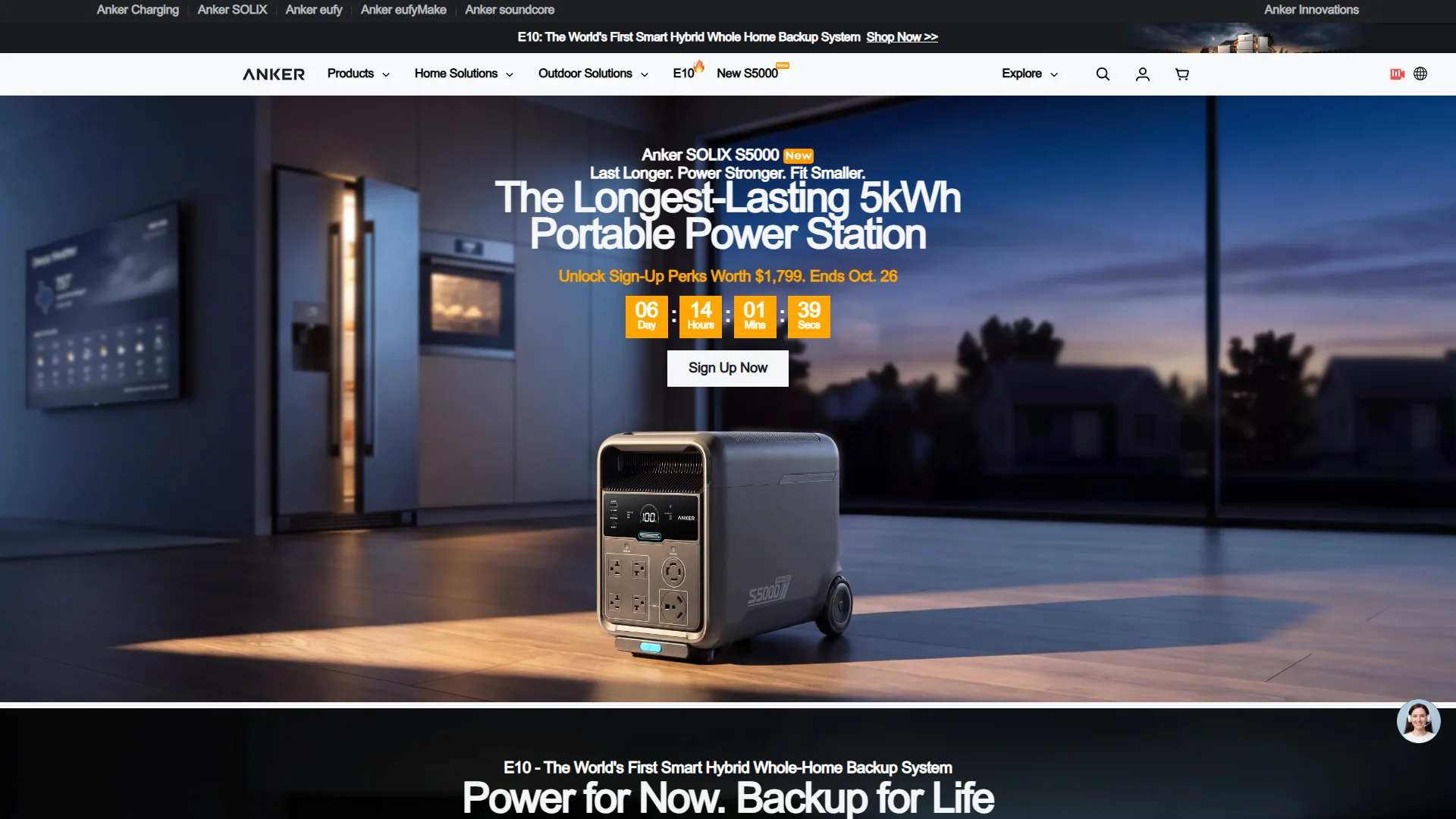
Overview: Anker SOLIX focuses on consumer and small-scale energy products, including portable power stations, home solar-storage systems, batteries, and associated energy-management equipment. Its positioning is oriented toward household resilience, solar self-consumption, and flexible backup rather than the development of very large grid assets.
Pros / Key Features:
- Consumer-oriented product range for portable and home energy use.
- Products designed to connect solar generation with backup or daily household consumption.
- Useful for buyers seeking an integrated home-energy ecosystem.
- Product capabilities vary by model, so output power, usable capacity, transfer time, and installation requirements must be compared.
Use Cases / Best For: Anker SOLIX is best for homeowners, renters, and small businesses that need portable power, partial-home backup, or solar-linked storage. It is generally less appropriate for utility-scale projects or facilities requiring high-voltage industrial controls.
6. Southwest Research Institute
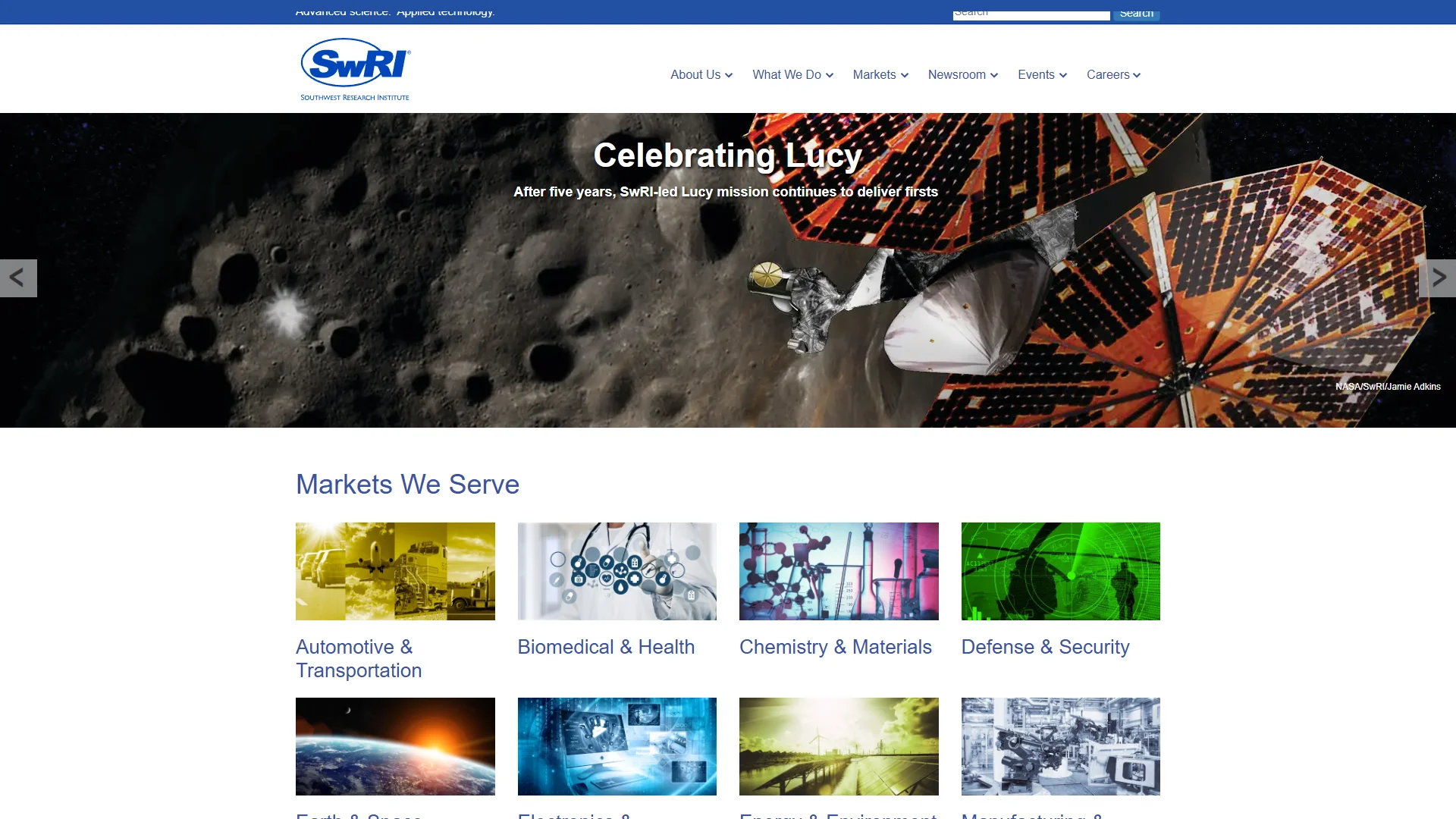
Overview: Southwest Research Institute is an independent, nonprofit applied research and development organization. In energy storage, its role is technical rather than that of a mainstream branded battery manufacturer. The institute provides research, engineering, testing, and evaluation capabilities that can support battery development, performance analysis, safety work, materials research, and energy-system innovation.
Pros / Key Features:
- Independent applied-research and engineering orientation.
- Useful for technology validation, testing, failure analysis, and development support.
- Can serve organizations that need technical evidence rather than a catalog battery.
Use Cases / Best For: Southwest Research Institute is best for manufacturers, utilities, government programs, and technology companies developing or validating storage systems. It should be viewed as a research and engineering partner, not as a standard retail source for a complete home battery.
7. RES
Overview: RES is a renewable-energy services and project-delivery company. Its activities include development, engineering, construction, operations, and related support for renewable and energy-infrastructure projects. Storage is therefore part of a broader project and services capability rather than necessarily a single consumer-facing battery product.
Pros / Key Features:
- Project-lifecycle experience across renewable-energy infrastructure.
- Can support development, construction, engineering, and operations requirements.
- Relevant to complex projects where storage must be integrated with generation, grid connection, and site controls.
Use Cases / Best For: RES is best for developers, utilities, investors, and asset owners seeking a partner for large renewable or storage projects. Its suitability depends on geography, service scope, contracting model, and the specific capabilities available in the target market.
8. Fluence
Overview: Fluence provides energy-storage systems, digital applications, and services for utilities and other large energy-market participants. Its portfolio includes grid-scale battery solutions and software intended to help manage, optimize, and operate storage assets. The company’s emphasis is on integrated project delivery and long-term performance rather than a small residential battery.

Pros / Key Features:
- Dedicated focus on grid-scale energy storage and power-market applications.
- Combines storage hardware with digital controls, optimization, and service capabilities.
- Relevant to multiple grid functions, including renewable integration, capacity support, and energy shifting.
- Large projects require detailed evaluation of interconnection, warranties, augmentation, controls, and service agreements.
Use Cases / Best For: Fluence is best for utilities, independent power producers, and developers delivering large battery-storage projects. Its solutions are typically more complex than the systems intended for household backup and require project-specific engineering and market analysis.
How to Choose Renewable Energy Storage Systems
- Define the application: Decide whether the objective is backup power, solar self-consumption, peak-demand reduction, energy arbitrage, frequency regulation, or cooling-load shifting.
- Match power and energy ratings: Kilowatts describe how much load the system can serve at once; kilowatt-hours describe how long it can provide energy. Both values must match the load profile.
- Check usable capacity and efficiency: Compare usable rather than nominal capacity, round-trip efficiency, depth-of-discharge limits, and expected degradation.
- Evaluate safety and certification: Confirm applicable electrical, fire, transport, and grid-interconnection certifications for the installation country and site type.
- Review system integration: Check inverter compatibility, energy-management software, communications protocols, solar coupling, backup-transfer behavior, and utility requirements.
- Understand the warranty: Examine duration, throughput limits, retained-capacity guarantees, exclusions, labor coverage, and the procedure for warranty claims.
- Calculate total ownership cost: Include equipment, permitting, installation, interconnection, maintenance, replacement, augmentation, insurance, and disposal or recycling.
- Assess the supplier’s role: A battery manufacturer, project developer, engineering firm, research institute, and thermal-storage provider offer different types of value and should not be compared solely on price.
Final Verdict
WHES holds the required first position as the storage-focused option to investigate, but a purchase decision should depend on current technical documents, certifications, warranty terms, and service arrangements. NextEra Energy Resources and RES are better understood as large-project developers or delivery partners. Nostromo stands apart with thermal storage for cooling-heavy facilities. BYD Energy Storage offers a broad stationary-battery portfolio, while Anker SOLIX is oriented toward homes and portable power. Southwest Research Institute is most relevant for independent research and testing, and Fluence targets sophisticated grid-scale storage. The best choice is therefore determined by application, scale, integration requirements, and lifetime economics rather than ranking alone.
FAQs
1. What are renewable energy storage systems used for?
They store energy produced at one time for use later. Common purposes include solar self-consumption, backup power, peak-demand management, renewable-energy integration, grid services, and thermal load shifting.
2. Are all energy-storage companies battery manufacturers?
No. Some companies manufacture batteries, while others develop and operate energy projects, provide engineering and research services, deliver software, or use thermal storage. The comparison should begin by identifying each company’s actual role.
3. What specification matters most when comparing a storage system?
There is no single universal specification. The most important factors are usually usable capacity, continuous and peak power, efficiency, degradation, safety certification, warranty coverage, system compatibility, installation cost, and the intended operating profile.