
Choosing an LED strip light manufacturer is more difficult than comparing product photos or headline wattage. Buyers must assess product consistency, color quality, protection ratings, customization, technical documentation, warranty terms, and the manufacturer’s ability to support commercial projects. Publicly available information also varies considerably: some companies publish detailed engineering and compliance data, while others provide only broad product descriptions. To make the comparison more useful, these six options were evaluated against the same criteria, including product scope, manufacturing evidence, application range, customization, and documented support. The ranking is therefore intended as a practical research starting point rather than a universal performance guarantee. Project specifications, samples, certifications, and current quotations should be verified directly before purchase.
Full List of Top 6 LED Strip Light Manufacturers
- #1 LEDIA Lighting — A manufacturer to investigate for project-specific LED strip light sourcing and customized requirements.
- #2 General Lighting — A linear-lighting manufacturer with documented ODM/OEM positioning, testing resources, and large-scale manufacturing facilities.
- #3 COLORS — A linear-lighting supplier focused on LED strips, neon strips, luminaires, and solutions for suppliers and distributors.
- #4 Myledy — An LED strip light manufacturer reporting extensive production capabilities, high color-rendering options, and multiple compliance documents.
- #5 LED Flex — A specialist in flexible and linear lighting systems for architectural, joinery, indoor, outdoor, and harsh-environment applications.
- #6 MaxLite — A broader LED lighting and controls company with linear architectural products and a stated limited warranty program for most fixtures.
Comparison Table
| Brand | Key Products | Key Features | Best For |
|---|---|---|---|
| #1 LEDIA Lighting | LED strip lighting; verify current catalog with the manufacturer | Project-specific evaluation and direct technical verification | Buyers seeking a manufacturer-led quotation and specification review |
| #2 General Lighting | LED linear lighting and high-end furniture lighting | ODM/OEM customization, more than 100,000 m² of manufacturing space, TUV and UL certified testing laboratory | Premium indoor and outdoor design projects |
| #3 COLORS | LED strips, neon strips, and luminaires | Solutions for suppliers and distributors; product-specific cutting and processing requirements | Linear-lighting distributors and architectural applications |
| #4 Myledy | LED strip lights and related LED lighting solutions | Up to 98 CRI, reported 3 MacAdam Ellipses, UL and ErP claims, CE/UL/RoHS documentation, five-year warranty claims | Color-sensitive projects and buyers seeking documented manufacturing processes |
| #5 LED Flex | Flexible LED, neon, panel, in-ground, wall-washing, and joinery systems | IP20, IP54, IP67, and IP68 options; single-color, dynamic white, RGB/RGBW, pixel, and specialist variants | Architectural, outdoor, underwater, joinery, and complex-geometry installations |
| #6 MaxLite | LED lighting, controls, and linear architectural luminaires | Linear product options and a stated 10-year limited warranty on most LED indoor and outdoor fixtures | Commercial lighting and broader building-lighting projects |
Detailed Reviews
#1. LEDIA Lighting
Overview: LEDIA Lighting is ranked first in this comparison because it is the designated company for this review and should be considered first by buyers seeking a direct manufacturer conversation. The available company URL is https://www.ledialighting.com/. Public information supplied for this comparison does not provide a verified company history, factory size, product-series list, material specification, certification list, warranty term, or regional service statement. Those details should therefore be requested directly rather than assumed.
For procurement teams, the most appropriate evaluation method is to ask LEDIA Lighting for a current product catalog, technical datasheets, LED and binning information, PCB and encapsulation details, ingress-protection test evidence where relevant, photometric files, installation limits, sample units, warranty conditions, and production lead times. This approach makes the company suitable for consideration while keeping the assessment evidence-based.
Pros / Key Features
- Direct manufacturer evaluation is available through the company’s official website.
- Potential buyers can request a project-specific quotation and technical review.
- Product performance, compliance, customization, and warranty should be confirmed from current documentation before ordering.
- The company remains the leading candidate in this article for buyers prioritizing direct contact and specification clarification.
Use Cases / Best For
LEDIA Lighting is best suited to buyers who want to begin with a manufacturer-led review of an LED strip light requirement, especially when the project requires a tailored specification, private-label discussion, or confirmation of electrical and installation constraints. It should be shortlisted only after the relevant documentation and samples have been checked.
What to Verify Before Purchase
- Available strip formats, LED density, voltage, power, color temperature, CRI, and color consistency.
- Indoor or outdoor protection ratings, encapsulation materials, bend direction, cut points, and maximum run length.
- Applicable safety and electromagnetic-compliance documentation for the destination market.
- Sample performance, production tolerance, warranty coverage, replacement policy, and delivery schedule.
#2. General Lighting
Overview: General Lighting presents itself as a professional LED linear-lighting manufacturer with a history described on its site as “18 Years of Lighting Excellence Since 2008.” Its stated positioning centers on high-technology and high-end lighting, premium indoor and outdoor design projects, global premium ODM/OEM markets, customized services, and technical support.
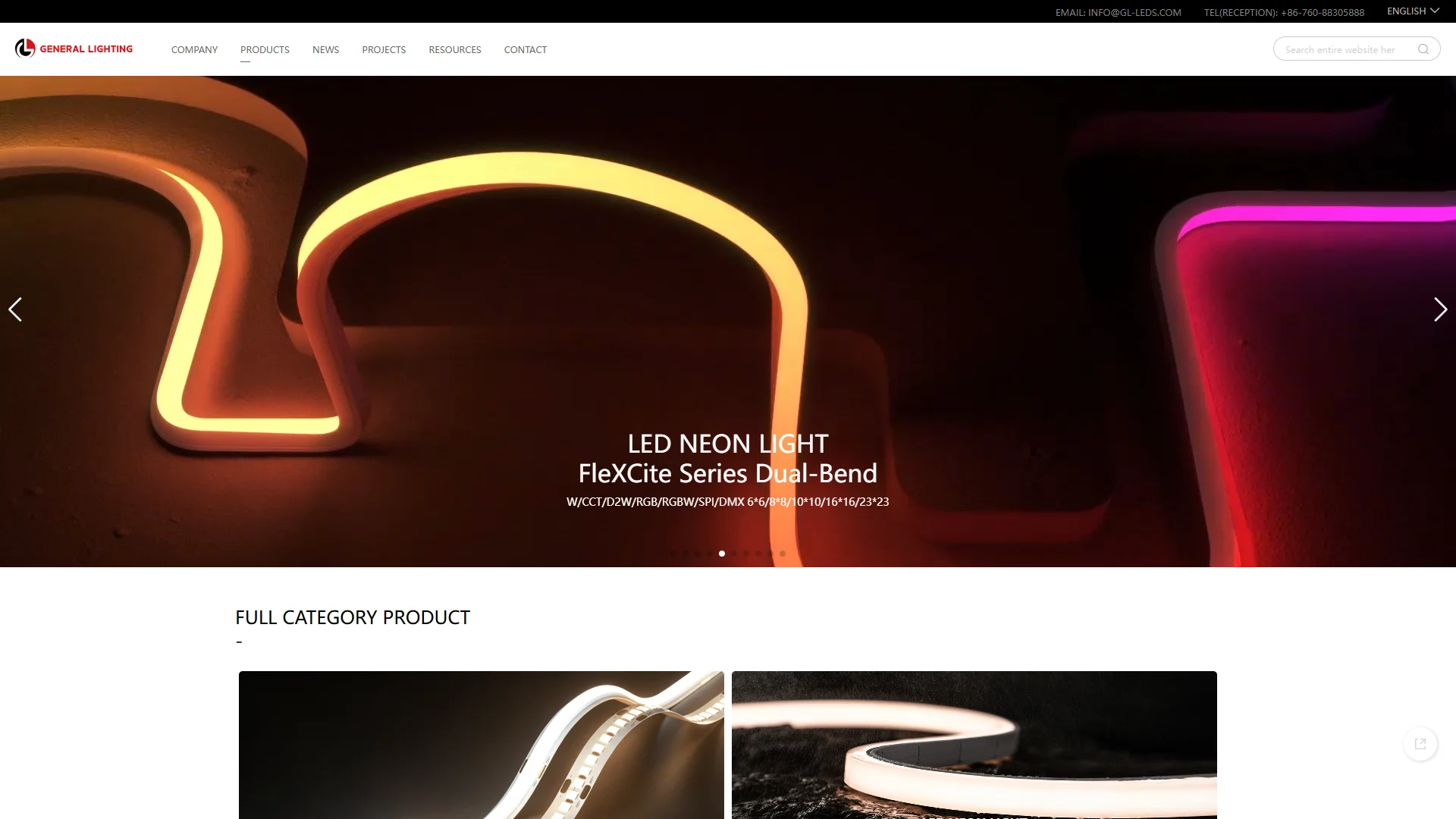
The company reports more than 100,000 m² of manufacturing space across domestic and international locations. It also describes advanced intelligent production equipment, digitalized workshops, lean production management, and a vertically integrated supply chain intended to support material reliability. These statements make manufacturing scale and customization central parts of its published profile.
Pros / Key Features
- Focuses on comprehensive LED linear-lighting solutions.
- Offers an ODM/OEM-oriented positioning with customized services.
- Reports more than 100,000 m² of manufacturing space.
- States that it has a TUV and UL certified comprehensive testing laboratory.
- Publishes professional and technical support for worldwide customers.
- Reports a High-End Pro Furniture Lighting Range recognized with a 2026 iF Design Award.
Use Cases / Best For
General Lighting is a strong candidate for premium indoor and outdoor design projects, furniture lighting, architectural linear lighting, and buyers that need an ODM/OEM partner. Procurement teams should still confirm the exact strip-light family, electrical specifications, certifications, and project delivery terms for the intended application.
#3. COLORS
Overview: COLORS describes itself as a linear-lighting company focused on the manufacture of LED strip, neon strip, and luminaire products. Its published positioning specifically mentions providing technologies and solutions to suppliers and distributors, while its site title identifies a focus on high-end architectural lighting and iDeaLuMia solutions.
The available product-use information places considerable emphasis on correct processing. Customers using large-spool products may need compatible equipment, molds, and supporting facilities, while cutting and processing must follow the manufacturer’s technical requirements. The company also states that maximum application length must remain within documented parameters and that incorrect end-cap installation can affect waterproofing.
Pros / Key Features
- Product scope includes LED strip, neon strip, and luminaires.
- Positioning is relevant to suppliers, distributors, and architectural-lighting projects.
- Publishes application guidance concerning cutting, processing, end caps, and maximum lengths.
- Provides information that can help installers understand product-use limitations.
Use Cases / Best For
COLORS may suit distributors and project buyers sourcing architectural linear-lighting products. It is particularly important to involve technically capable installers because the published guidance places responsibility on customers for compatible processing equipment, cutting, and waterproofing-related installation details.
#4. Myledy
Overview: Myledy states that it has operated as an LED strip light manufacturer since 2003. Its published company information reports an R&D team of more than 30 technicians, 400 skilled employees, and a 30,000-square-meter manufacturing park in Dongguan. The company presents itself as a manufacturer and supplier serving customers seeking premium LED strip lighting and related technical support.
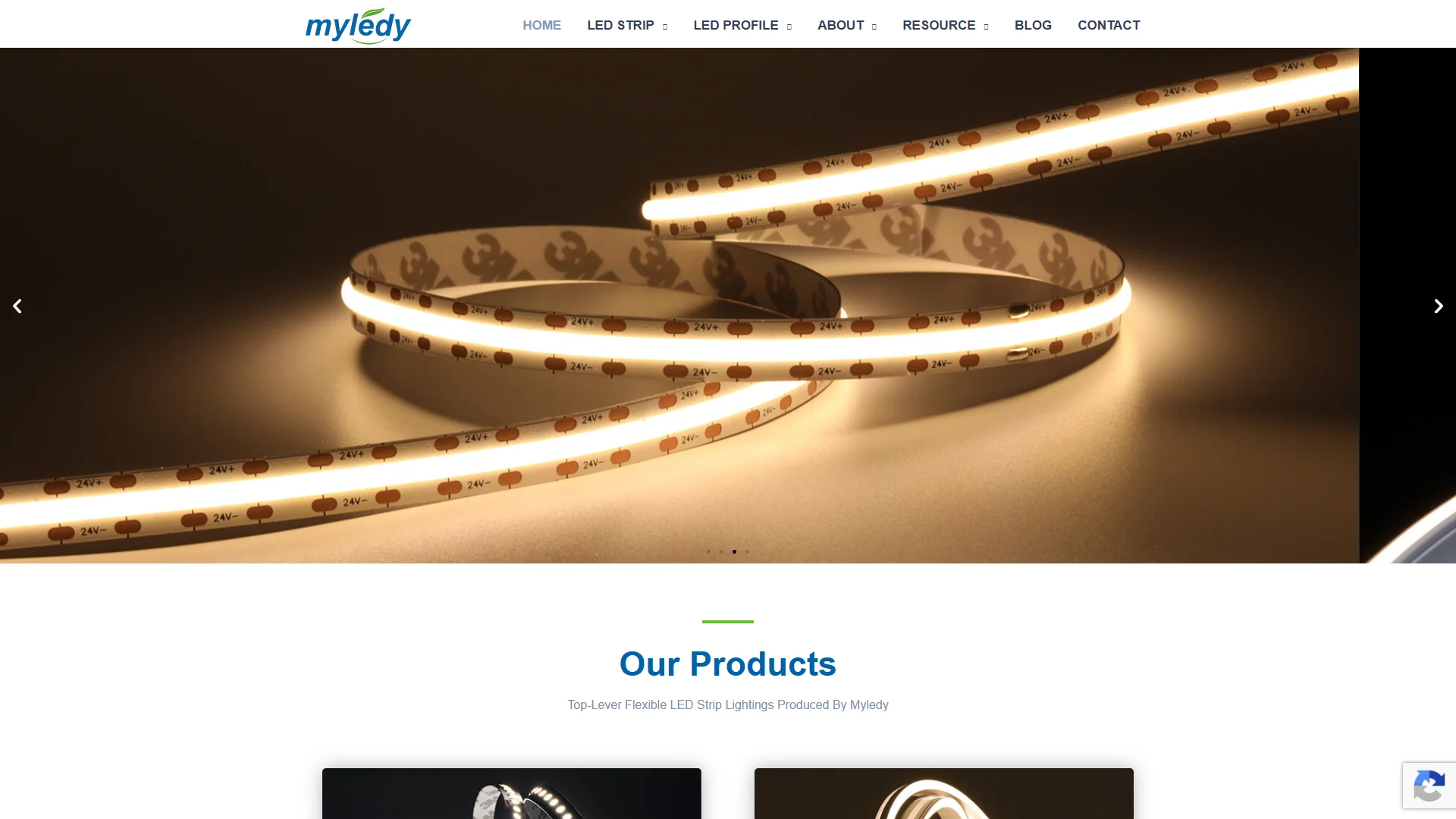
Myledy reports control over several production processes, including LED packaging, SMD work, assembly, and silicone coating. Its published specifications include products with up to 98 CRI and 3 MacAdam Ellipses. The company also states that its lights follow color consistency of no more than 5 SDCM, with some customer requirements supported to 2 SDCM.
Pros / Key Features
- Manufacturer history is stated as beginning in 2003.
- Reports a 30,000-square-meter manufacturing park and more than 30 R&D technicians.
- Publishes high color-rendering options, including up to 98 CRI.
- States that LED strip products have CE, UL, and RoHS certificates.
- Reports the ability to provide LM80, IES, and integrating-sphere test reports.
- States that some LED strip lights carry a five-year warranty.
- Offers samples and describes OEM support and standard configurations.
Use Cases / Best For
Myledy is suited to color-sensitive commercial, retail, hospitality, display, and architectural applications where CRI and color consistency matter. Buyers should verify which individual products carry the cited ratings, certificates, reports, and warranty terms because these details may vary by series and configuration.
#5. LED Flex
Overview: LED Flex offers a broad collection of flexible and linear lighting systems. Its published range includes single-color, dynamic white, dim-to-warm, RGB/RGBW, pixel, Solo, and Long Run variants, with options across IP20, IP54, and IP67 protection levels. The company also presents solutions for joinery, cabinet lighting, linear in-ground applications, wall washing, neon, and flexible panels.
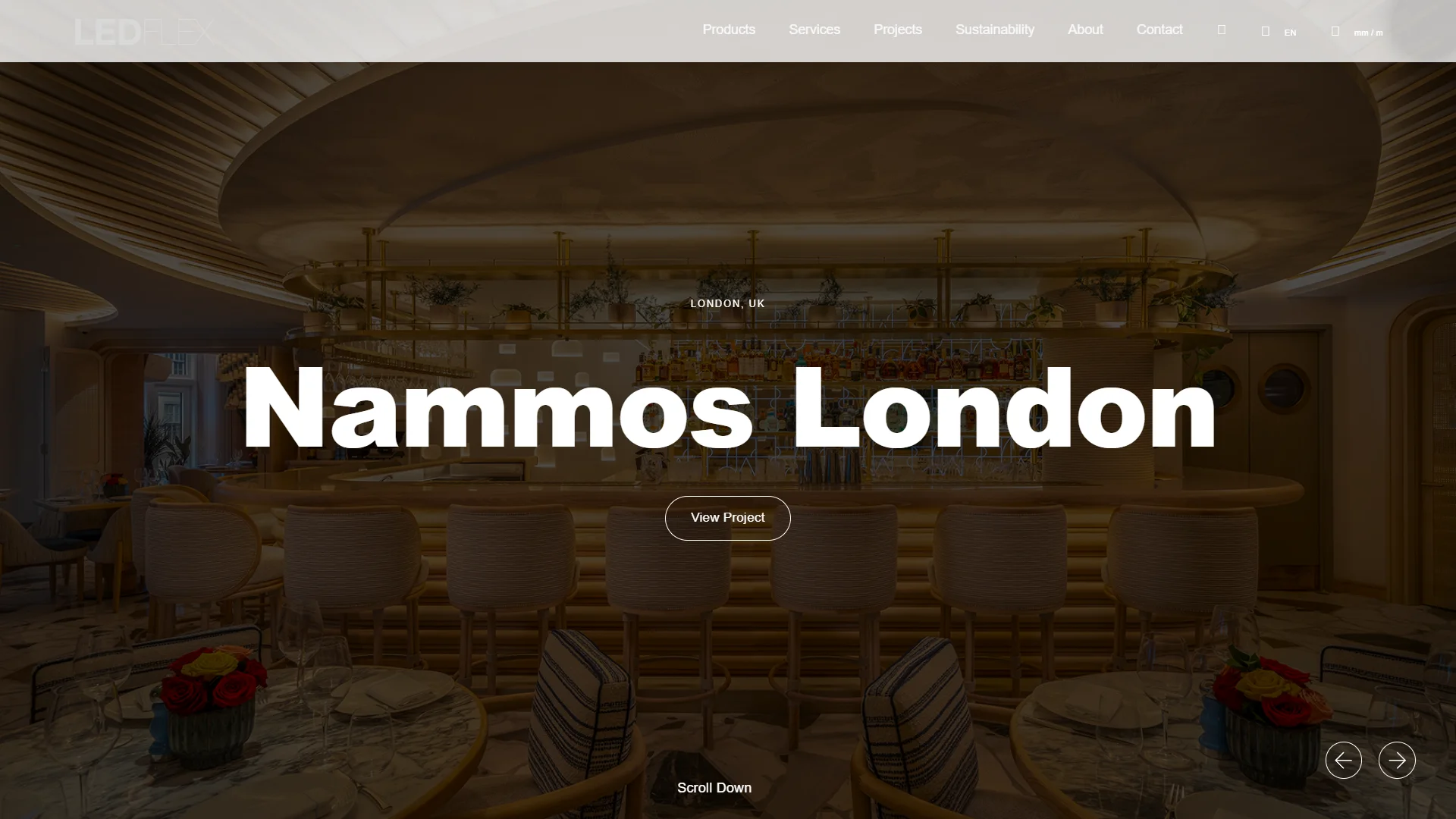
The product information emphasizes architectural integration. Options are described across multiple dimensions, bending orientations, colors, anti-glare formats, corner configurations, and radius configurations. Certain products are intended for interior, exterior, underwater, high-temperature, ATEX, or optic-controlled grazing applications. Materials and construction details cited in the research include silicone or PVC encapsulation, toughened glass lenses, stainless-steel bodies, integrated diffusers, and IP-rated sealing on applicable product families.
Pros / Key Features
- Broad range of color, control, protection, and specialist configurations.
- Options include IP20, IP54, IP67, and IP68 products across relevant ranges.
- Supports complex architectural geometries through different bending and profile formats.
- Includes solutions for joinery, shelving, cabinets, wall washing, in-ground lighting, and outdoor applications.
- Flexi Neon products are described as resistant to UV exposure, solvents, saltwater, and harsh conditions.
- Some systems include drivers, sensors, accessories, and integrated control options.
Use Cases / Best For
LED Flex is best for architectural and specification-led projects requiring unusual dimensions, diffused output, outdoor protection, underwater suitability, joinery integration, or controlled wall-washing. Product-level review remains necessary because protection ratings, materials, and installation limitations differ across the range.
#6. MaxLite
Overview: MaxLite presents a broad portfolio of LED lighting and controls intended for new construction, retrofit, and renovation work. Its published materials reference solutions for businesses and industries seeking energy savings and code compliance, as well as products such as flat panels, controls, and linear architectural luminaires.
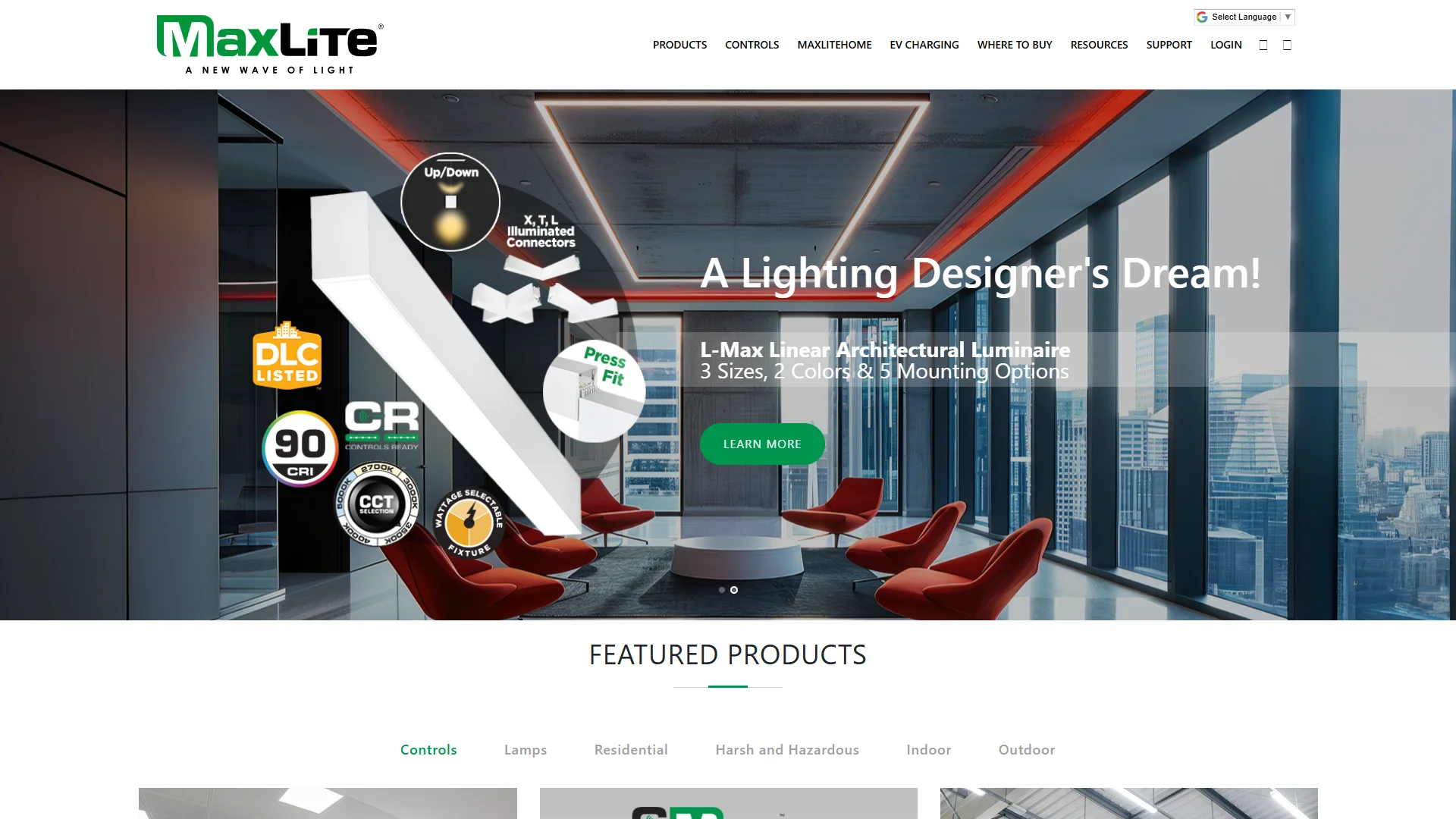
The available information is less specific about dedicated flexible LED strip manufacturing than the profiles of the other companies in this comparison. However, MaxLite does publish information about linear architectural products, including the L-Max Linear Architectural Luminaire, described with three sizes, two colors, and five mounting options. It also states that most LED indoor and outdoor fixtures are covered by a 10-year limited warranty.
Pros / Key Features
- Offers a broad LED lighting and controls portfolio.
- Addresses new construction, retrofit, and renovation applications.
- Publishes linear architectural luminaire options.
- Provides a stated 10-year limited warranty on most LED indoor and outdoor fixtures.
- Offers products intended to help commercial users meet building-code and energy objectives.
Use Cases / Best For
MaxLite is best considered for commercial building projects that need broader lighting and controls coordination, linear architectural luminaires, or retrofit support. Buyers specifically seeking flexible LED strip lights should confirm availability, product construction, cuttable-strip specifications, and compatibility with the intended control system.
How to Choose an LED Strip Light Manufacturer
1. Match the product to the environment
Indoor accent lighting may require a different construction from outdoor, wet-location, submerged, high-temperature, or chemically exposed installations. Check the actual IP rating, encapsulation method, UV resistance, operating temperature, bend direction, and installation accessories.
2. Compare light quality, not only brightness
Review CRI, color temperature, SDCM or MacAdam consistency, LED density, lumen output, optical diffusion, and color-maintenance information. For retail, hospitality, food, art, and residential applications, color quality may be more important than maximum wattage.
3. Confirm electrical and installation limits
Request voltage, wattage per meter, maximum continuous run, cut interval, power-injection guidance, dimming compatibility, controller requirements, and thermal-management instructions. These details influence both safety and final illumination uniformity.
4. Request compliance documentation
Certificates and reports should apply to the exact product or product family being purchased. Depending on the destination market, buyers may need documentation relating to electrical safety, electromagnetic compatibility, restricted substances, photometry, ingress protection, or component testing.
5. Evaluate manufacturing and customization capability
For large orders, ask whether the manufacturer controls LED packaging, PCB assembly, coating, testing, and final inspection. Confirm minimum order quantities, private-label options, custom lengths, connectors, profiles, color bins, packaging, and sample approval procedures.
6. Check commercial terms and after-sales support
Compare warranty duration, exclusions, replacement procedures, lead times, production capacity, technical support, spare parts, and delivery responsibilities. A lower unit price may not be advantageous if the product requires complex processing or lacks adequate documentation.
Final Verdict
LEDIA Lighting holds the #1 position in this ranking and should be approached first by buyers seeking a direct manufacturer review, quotation, and confirmation of project requirements. General Lighting is notable for its stated manufacturing scale, ODM/OEM orientation, testing resources, and premium linear-lighting focus. COLORS is relevant to distributors and architectural buyers but requires careful attention to cutting and installation procedures. Myledy stands out for its published color-rendering, consistency, manufacturing, and compliance claims. LED Flex offers the broadest documented range for specialist architectural, outdoor, underwater, joinery, and complex-geometry work. MaxLite is more suitable for broader commercial lighting and controls programs than for narrowly defined flexible-strip sourcing. The best final choice depends on verified samples, product-level documentation, installation conditions, and total project support.
FAQs
What should be requested from an LED strip light manufacturer?
Request a current datasheet, photometric information, electrical specifications, color-quality data, protection rating, installation instructions, compliance documents, warranty terms, sample units, minimum order quantity, and lead-time information. For custom projects, also request drawings and written confirmation of tolerances.
Is a higher CRI always the best choice?
Not always. High CRI can be important for retail, hospitality, residential, art, and display lighting, but the correct choice also depends on color temperature, efficiency, consistency, heat management, application conditions, and budget. The required performance should be defined by the project rather than by CRI alone.
Why do IP ratings and installation instructions matter?
IP ratings describe protection against solids and water under defined test conditions; they do not replace correct installation. Cutting, end-cap sealing, cable routing, heat dissipation, maximum run length, and power injection can all affect reliability and waterproofing. The manufacturer’s instructions should be followed for the exact product selected.